Heating is one of the biggest everyday running costs for many UK households.
Traditional thermostats and heating timers allow you to control when your heating operates, but smart thermostats offer additional features that can make managing your home more convenient.
From controlling your heating through a mobile application to creating schedules around your daily routine, smart heating technology gives you more flexibility.
But are smart thermostats worth installing, and what should you look for before buying one?
Let’s take a closer look.
1. What is a smart thermostat?
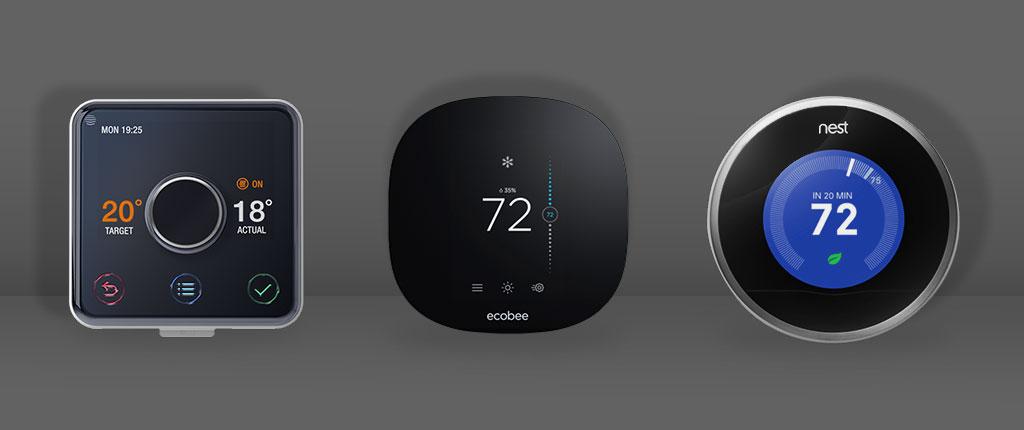
A smart thermostat is a connected heating control that allows you to manage your heating through a mobile application, compatible smart home platform or physical controller.
Depending on the model, you may be able to:
- Adjust your heating remotely.
- Create weekly heating schedules.
- Set different temperatures at different times.
- Monitor indoor temperatures.
- Use location-based features.
- Connect compatible room sensors.
- Integrate heating with other smart home devices.
Some systems also offer learning features that adapt schedules based on your usage.
The exact capabilities depend on the thermostat, heating system and manufacturer.
2. How does a smart thermostat work?
A smart thermostat communicates with your heating system using compatible controls.
Many systems include a thermostat or controller, a receiver connected to the heating equipment and a mobile application.
When the temperature falls below your chosen setting, the thermostat can request heat from the heating system.
Once the target temperature is reached, it can stop requesting heat.
Some systems support more advanced control, including separate heating zones and individual room temperatures.
However, compatibility is extremely important.
A thermostat designed for one heating arrangement may not work with another without additional equipment or modifications.
3. What features should you look for?
Not all smart thermostats offer the same functionality.
Before choosing one, consider these features.
Remote heating control
Being able to adjust your heating from your phone can be useful if your routine changes.
For example, you might want to change your schedule when returning home earlier than expected.
Heating schedules
Look for an application that makes it easy to create different schedules for weekdays and weekends.
This can help you avoid heating an empty home unnecessarily.
Multi-room control
Some systems support additional room sensors or smart radiator controls.
This can allow different rooms to follow different temperature settings.
Check whether additional hardware is required and whether your existing heating system supports it.
Open-window detection
Some thermostats can identify sudden temperature changes that may indicate an open window.
Depending on the system, this may temporarily reduce or stop heating.
Smart home integration
Check whether the thermostat works with your preferred ecosystem, such as Amazon Alexa, Google Home or Apple Home.
Don’t assume every advertised integration supports every function.
4. Can a smart thermostat reduce heating bills?
Smart thermostats can help households manage heating more efficiently by making it easier to create suitable schedules and avoid unnecessary heating.
For example, you could arrange for heating to reduce while everyone is away and return to a comfortable setting before the household gets home.
However, a smart thermostat does not automatically guarantee lower bills.
Savings depend on several factors:
- Your existing heating controls.
- The insulation of your property.
- Your heating habits.
- The temperature settings you choose.
- The type of heating system installed.
- How effectively you use the available features.
If you already have a well-configured heating schedule, upgrading to a smart thermostat may make less difference to your energy consumption.
Its biggest benefit may be convenience and better control rather than guaranteed financial savings.
5. Are smart thermostats compatible with UK heating systems?
UK homes use several different heating arrangements.
These can include:
- Gas combination boilers.
- Conventional boilers with hot water cylinders.
- System boilers.
- Electric heating.
- Underfloor heating.
- Heat pumps.
Compatibility varies considerably between products.
Before purchasing a thermostat, check:
- Whether it supports your boiler or heating system.
- Whether it supports the required wiring.
- Whether a receiver or additional controller is required.
- Whether it supports heating zones.
- Whether professional installation is necessary.
Some heating systems use simple on/off controls, while others support more advanced modulation or digital communication.
Choosing the wrong thermostat could mean losing important heating functions.
6. Do you need a smart thermostat or smart radiator valves?
A smart thermostat usually controls the main heating system.
Smart radiator valves provide more local control by allowing individual radiators to follow different temperature schedules.
Some households use both technologies together.
For example:
- The living room could follow a comfortable evening temperature.
- Bedrooms could use a lower overnight setting.
- A home office could heat only during working hours.
- Spare rooms could remain at a lower temperature when unused.
However, radiator valves are not a replacement for a compatible main heating controller in every installation.
Check how the devices communicate and whether they support the same heating system.
7. What does installation involve?
Installation depends on your existing heating equipment and the thermostat you choose.
Some products are designed for relatively straightforward replacement, while others require changes to electrical wiring or boiler controls.
Before purchasing:
- Identify your boiler or heating system.
- Check the existing thermostat and programmer.
- Read the manufacturer’s compatibility information.
- Confirm whether a receiver is needed.
- Check whether professional installation is recommended or required.
Use a suitably qualified heating or electrical professional where installation involves work that requires specialist competence.
In particular, gas-related work must be carried out by a Gas Safe registered engineer in the UK.
8. How much do smart thermostats cost?
The cost varies depending on the manufacturer, features and installation requirements.
Additional costs may include:
- Installation.
- Extra room sensors.
- Smart radiator valves.
- Additional heating zones.
- Replacement equipment.
Don’t compare thermostats using their purchase prices alone.
Consider the total cost of the system and whether you will actually use the additional features.
9. Popular smart thermostat features compared
| Feature | Basic smart thermostat | Advanced smart thermostat |
|---|---|---|
| Mobile control | Usually | Usually |
| Heating schedules | Yes | Yes |
| Remote temperature changes | Usually | Usually |
| Learning features | Varies | Some models |
| Room sensors | Sometimes | More options |
| Multi-zone heating | Limited or optional | Depends on system |
| Smart home integration | Varies | Varies |
Always check the exact product specifications because features differ between manufacturers and models.
10. Are smart thermostats worth it?
A smart thermostat may be worthwhile if:
- You want remote heating control.
- Your routine changes regularly.
- You want more flexible heating schedules.
- You have compatible heating equipment.
- You want to explore multi-room temperature control.
- Your existing controls are difficult to manage.
It may be less worthwhile if your current thermostat already meets your needs and you rarely change your heating schedule.
The best approach is to identify what you want to improve before spending money.
Final thoughts
Smart thermostats can make heating easier to manage and give households more flexibility over their heating schedules.
They can be particularly useful for people with changing routines or homes that benefit from more detailed temperature control.
However, compatibility, installation costs and the features you genuinely need should all be considered before buying.
A smart thermostat is not a guaranteed way to reduce energy bills, but when configured correctly, it can help you manage your heating more effectively.
At SmartHomeNest UK, our goal is to help you understand smart home technology and choose equipment that genuinely benefits your household.