With energy bills remaining a major expense for UK households, smart home technology is often advertised as an easy way to save money.
Smart thermostats, energy-monitoring plugs, automated lighting and connected heating controls all promise greater efficiency.
But do these devices genuinely reduce your bills, or are they simply convenient gadgets that cost more money?
The answer depends on how you use them.
In this guide, we’ll explain which smart home technologies can help reduce energy consumption, calculate realistic savings and show you where to start without spending a fortune.
Can Smart Home Technology Really Save Energy?
Yes, but smart technology doesn’t automatically make your home more energy efficient.
Most smart devices save energy by helping you avoid unnecessary consumption.
For example:
- A smart thermostat can reduce heating when nobody is home.
- Smart radiator controls can lower temperatures in unused rooms.
- Smart plugs can disconnect suitable devices when they’re not needed.
- Smart lighting schedules can prevent lights being left on.
- Energy monitoring can reveal which appliances consume the most electricity.
The key is changing how energy is used.
If you already manage your heating and electricity efficiently, installing additional smart devices may provide little financial benefit.
1. Smart Thermostats: Potentially the Biggest Opportunity
Heating is one of the largest energy expenses for many UK households.
A smart thermostat can help you manage your heating more conveniently through a smartphone app.
Depending on the model, features may include:
- Heating schedules.
- Remote temperature adjustment.
- Automatic away modes.
- Location-based heating controls.
- Temperature history.
- Learning your household routine.
How Smart Thermostats Can Save Money
Imagine your heating normally runs while everyone is away at work or school.
A smart thermostat could reduce the temperature during those periods and restore a comfortable temperature before you return.
This may reduce unnecessary heating.
However, a traditional programmable thermostat can also achieve similar savings when correctly configured.
Our recommendation: If you already have effective heating controls and use them consistently, don’t assume upgrading to a smart thermostat will produce substantial additional savings.
What Temperature Should You Use?
Energy Saving Trust generally recommends setting your thermostat to the lowest comfortable temperature, typically between 18°C and 21°C for most people.
Individual needs vary, particularly for older people, young children and people with health conditions.
Don’t sacrifice essential warmth to save money.
2. Smart Radiator Valves: Heat the Rooms You Actually Use
Smart thermostatic radiator valves, often called smart TRVs, can help manage temperatures in individual rooms.
For example, you might want:
- A comfortable living room in the evening.
- A cooler spare bedroom.
- A warmer home office during working hours.
- Reduced heating in rooms that aren’t being used.
Compatible smart radiator controls can make these adjustments automatically.
Are Smart Radiator Valves Worth Buying?
They can be particularly useful in larger homes where different rooms have different heating requirements.
However, savings depend on your heating system, insulation and existing controls.
Some installations require a compatible central heating controller or hub.
Check compatibility before purchasing.
3. Smart Plugs: Monitor Electricity and Reduce Waste
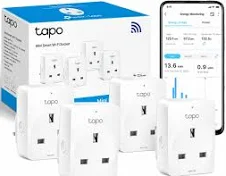
Smart plugs are among the easiest smart home devices to install.
They sit between a wall socket and a compatible appliance, allowing you to control the power supply.
Some models also measure electricity consumption.
Useful Smart Plug Applications
- Switching decorative lighting off overnight.
- Monitoring a television’s electricity consumption.
- Controlling suitable lamps automatically.
- Measuring how much electricity an appliance uses.
- Disconnecting non-essential equipment when appropriate.
How Much Could a Smart Plug Save?
Imagine an appliance consumes 10 watts while idle.
If you disconnect it for 12 hours per day:
10 watts × 12 hours = 0.12 kWh saved daily.
Over one year:
0.12 × 365 = 43.8 kWh.
At an illustrative electricity price of 26.32p per kWh, the gross saving would be approximately £11.53 per year.
But remember:
- Smart plugs consume some electricity themselves.
- Many modern appliances have very low standby consumption.
- Some devices should remain connected continuously.
- The cost of buying the smart plug affects the payback period.
Important: Never use a smart plug to control essential equipment or high-powered heating appliances unless the manufacturer explicitly permits that use.
4. Smart Lighting: Convenient, but Savings Depend on Your Bulbs
Smart lighting can help reduce electricity waste through schedules, motion detection and automatic switching.
For example, a hallway light could turn on when someone enters and switch off after a short period.
However, the biggest saving often comes from using efficient LED bulbs rather than making them smart.
LED vs Older Bulbs: Example Calculation
Consider replacing a 60-watt incandescent bulb with a 9-watt LED.
If the light is used for four hours daily:
| Bulb type | Daily consumption | Annual consumption |
|---|---|---|
| 60W incandescent | 0.24 kWh | 87.6 kWh |
| 9W LED | 0.036 kWh | 13.14 kWh |
The difference is 74.46 kWh per year.
At 26.32p per kWh, that represents approximately £19.60 in annual electricity savings.
This is an illustrative comparison and excludes purchase costs.
A smart LED bulb may use slightly more electricity than an ordinary LED because it maintains connectivity.
Our recommendation: Replace inefficient bulbs with LEDs first. Add smart features where automation or convenience provides additional value.
5. Motion Sensors: Stop Lights Being Left On
Motion sensors can automatically operate compatible lighting.
They are particularly useful in:
- Hallways.
- Utility rooms.
- Cupboards.
- Garages.
- Staircases.
- Other areas used briefly.
For example, a utility room light could switch off automatically five minutes after movement stops.
This helps prevent lights being left on unnecessarily.
However, motion sensors also cost money and consume some power.
For rooms where lights are rarely left on, the financial saving may be small.
6. Smart Heating Schedules: Avoid Heating an Empty Home
A well-designed heating schedule can make a meaningful difference to energy consumption.
For a household with a predictable daily routine, you might create a schedule like this:
| Time | Example heating setting |
|---|---|
| 6:30 am | Comfortable morning temperature |
| 8:30 am | Reduced temperature while away |
| 4:00 pm | Prepare for occupants returning |
| 6:00 pm | Comfortable evening temperature |
| 10:30 pm | Lower overnight setting |
These times are examples, not universal recommendations.
A household with young children, shift workers or someone at home throughout the day will need a different schedule.
Heat pumps and certain underfloor heating systems may work best with steadier temperatures, so follow the installer’s guidance rather than copying a boiler-based schedule.
7. Energy-Monitoring Smart Plugs: Find Your Biggest Electricity Users
Before buying several smart devices, it can be useful to understand where your electricity is going.
An energy-monitoring smart plug can help measure the consumption of compatible appliances.
You might discover that:
- An older appliance uses more electricity than expected.
- A television setup has measurable standby consumption.
- A computer uses significant electricity during long sessions.
- A dehumidifier consumes more energy than you realised.
How to Calculate Appliance Running Costs
Use this formula:
Power in watts ÷ 1,000 × hours used × electricity price per kWh
For example, a 100-watt appliance operating for five hours:
100 ÷ 1,000 × 5 = 0.5 kWh.
At 26.32p per kWh:
0.5 × £0.2632 = approximately 13p.
This calculation can help you make informed decisions about which appliances are worth managing.
8. Smart Meters: Understand Your Household Consumption
A smart meter records household gas or electricity usage and can send readings to your supplier.
An in-home display may help you understand how much energy you’re using.
Smart meters are different from smart plugs.
A smart plug typically monitors one connected appliance, while a smart meter measures energy supplied to the property.
Do Smart Meters Automatically Save Money?
No.
A smart meter does not automatically reduce consumption.
However, seeing your usage may encourage better habits and help you identify unusually expensive periods.
Depending on your supplier and meter setup, smart meters can also support certain time-of-use tariffs.
9. Use Off-Peak Electricity Where It Makes Sense
Some UK electricity tariffs charge different rates at different times.
For example, an Economy 7 tariff typically offers cheaper electricity during a designated overnight period and more expensive electricity during other hours.
Other smart tariffs may have different off-peak windows.
If you’re on a suitable tariff, shifting some electricity use to cheaper periods could reduce costs.
Possible examples include:
- Charging an electric vehicle.
- Running a compatible dishwasher using its built-in delay function.
- Charging suitable home battery storage.
- Heating water with appropriately configured equipment.
Safety matters: Follow appliance manufacturers’ guidance and fire safety advice. Avoid running higher-risk appliances unattended or while sleeping simply to take advantage of a cheaper tariff.
Also, moving electricity use to cheaper hours doesn’t necessarily reduce the amount of energy consumed.
It reduces the price paid for that consumption.
10. Don’t Forget Insulation and Basic Heating Controls
Smart technology works best when your home is already reasonably efficient.
If your property loses heat quickly, a smart thermostat cannot solve the underlying problem.
Before spending hundreds of pounds on connected heating equipment, consider:
- Loft insulation.
- Draught-proofing suitable gaps.
- Correctly using existing radiator valves.
- Maintaining your heating system.
- Improving heating schedules.
- Using curtains and blinds appropriately.
- Checking whether your boiler controls are configured efficiently.
Energy Saving Trust estimates that installing and correctly using essential heating controls, where they are missing, could save around £100 per year in Great Britain.
This is not an additional £100 saving guaranteed by buying a smart thermostat.
Which Smart Home Devices Are Most Likely to Save Money?
| Technology | Saving potential | Best reason to consider it |
|---|---|---|
| Smart thermostat | Potentially significant | Avoid unnecessary heating |
| Smart radiator controls | Depends on heating setup | Manage room temperatures |
| Energy-monitoring plug | Usually modest directly | Identify electricity consumption |
| Smart LED lighting | Depends on existing bulbs | Efficient lighting and automation |
| Motion sensors | Usually modest | Avoid lights being left on |
| Smart meter | Indirect | Understand household energy use |
| Smart heating schedules | Potentially significant | Reduce unnecessary heating periods |
The amount saved will vary substantially between households.
How Long Does Smart Home Technology Take to Pay for Itself?
A useful way to judge whether a device is worth buying is to calculate its payback period.
Example: Smart Thermostat
Suppose a smart thermostat and installation cost £180.
If it genuinely saves £60 per year compared with your existing setup:
£180 ÷ £60 = 3 years.
Example: Smart Plug
Suppose an energy-monitoring smart plug costs £15.
If its net electricity saving is £5 per year:
£15 ÷ £5 = 3 years.
Example: Smart Lighting
Suppose you spend £60 on smart lighting equipment but save only £6 per year compared with your existing efficient LED bulbs.
£60 ÷ £6 = 10 years.
These are hypothetical calculations, not predicted product savings.
They show why it’s important to compare the purchase cost against realistic energy reductions.
UK Energy Prices: November 2026
For the period from 1 October to 31 December 2026, Ofgem’s average price-cap unit rates for households paying by Direct Debit on standard variable tariffs in England, Scotland and Wales are:
| Energy | Average unit rate |
|---|---|
| Electricity | 26.32p per kWh |
| Gas | 7.97p per kWh |
Actual rates vary by region, payment method and tariff.
Fixed-rate customers may pay different amounts, and Northern Ireland has separate arrangements.
The price cap is reviewed quarterly, so these figures will change over time.
For the latest rates, visit Ofgem’s official energy price cap page.
A Simple Energy-Saving Plan for Beginners
You don’t need to automate your entire home to start reducing energy waste.
Step 1: Check Your Energy Usage
Review your electricity and gas bills to understand your current consumption.
Look at kilowatt-hours rather than just your monthly Direct Debit amount.
Step 2: Improve Existing Heating Settings
Use your thermostat, programmer and radiator valves correctly.
This may cost nothing.
Step 3: Replace Inefficient Lighting
If you still use older incandescent or halogen bulbs, consider suitable LED replacements.
Step 4: Measure Electricity Consumption
Try an energy-monitoring plug on a compatible appliance to understand its running costs.
Step 5: Automate Where Useful
Introduce smart heating schedules, lighting routines or other automation only where they solve a real problem.
Step 6: Review the Results
Compare your energy usage over time, accounting for seasonal weather and changes in household activity.
Don’t assume every reduction in your bill is caused by a new smart device.
Common Energy-Saving Mistakes
Buying Expensive Technology Without a Plan
A smart device is only worthwhile financially if the savings justify its cost.
Turning Heating Off Too Aggressively
An excessively cold home can create health and damp problems.
Keep your property adequately heated and follow advice appropriate to your heating system and household.
Assuming Smart Bulbs Always Save More
An ordinary LED bulb can be extremely efficient without any smart features.
Ignoring Subscription Costs
Some smart home products require subscriptions for particular features.
Include these costs when calculating savings.
Forgetting About Device Power Consumption
Smart hubs, plugs, bulbs and other connected equipment may use electricity even when they appear inactive.
Comparing Bills Without Considering the Weather
Heating costs are heavily affected by outdoor temperatures.
A warmer winter may reduce gas consumption even if you make no changes to your heating system.
Frequently Asked Questions
Do smart thermostats really save money?
They can, particularly when they help reduce unnecessary heating. However, savings may be small if you already use effective heating controls.
Are smart plugs worth buying to save electricity?
They can help with monitoring and controlling suitable appliances, but direct savings are often modest.
Do smart bulbs use electricity when turned off?
Many smart bulbs consume a small amount of electricity while connected so they can respond to commands.
What is the best smart home device for reducing bills?
It depends on your home. Better heating control may provide greater savings than automating appliances that already use very little electricity.
Can I save money without buying smart technology?
Yes. Improving heating schedules, reducing draughts and using efficient lighting can all help without requiring an expensive smart home setup.
Does a smart meter reduce energy bills?
Not automatically. It helps you understand consumption and may enable access to certain tariffs.
Final Verdict: What Actually Saves Money?
Smart home technology can help reduce energy consumption, but the biggest benefits usually come from using energy more efficiently rather than simply buying connected gadgets.
For many UK households, the most sensible priorities are:
- Use heating controls effectively.
- Avoid heating rooms unnecessarily.
- Replace inefficient lighting with LEDs.
- Measure electricity consumption before buying additional equipment.
- Automate devices where doing so prevents genuine waste.
A smart thermostat may be a worthwhile investment if your existing heating controls are limited.
An energy-monitoring plug can help identify expensive appliances.
Smart lighting and motion sensors can improve convenience while reducing unnecessary usage.
But no smart device guarantees lower bills.
The smartest approach is to understand your energy consumption first, then invest in technology that addresses a genuine problem.
Continue Building a Smarter Home
Explore more SmartHomeNest UK guides:
Useful UK Resources
Affiliate disclosure: Some links on SmartHomeNest UK may be affiliate links. If you purchase through these links, we may earn a commission at no additional cost to you. This helps support our website and allows us to continue creating useful guides.