Smart lighting is one of the easiest ways to introduce automation into your home.
Imagine switching your lights on using your phone, creating a relaxing evening atmosphere or automatically turning lights on when the sun goes down.
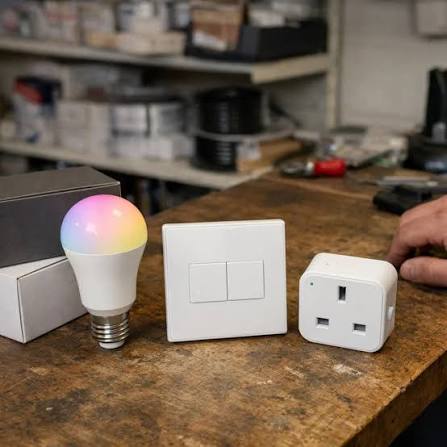
There are several ways to achieve this, but three popular options are smart bulbs, smart switches and smart plugs.
Although they can all help control lighting, they work differently and aren’t suitable for every situation.
Here’s what you need to know before choosing.
1. What are smart bulbs?
Smart bulbs replace your existing light bulbs with connected versions that can be controlled through an application, voice assistant or compatible smart home platform.
Depending on the model, you may be able to:
- Switch lights on and off remotely.
- Adjust brightness.
- Change colour temperature.
- Choose different colours.
- Create lighting schedules.
- Include lights in smart home automations.
Some smart bulbs connect directly to your Wi-Fi, while others communicate through a dedicated hub or bridge.
Advantages of smart bulbs
- Usually straightforward to install.
- No changes to existing electrical wiring.
- Easy to control individual lights.
- Many models support dimming and colour changes.
- Good for beginners.
Disadvantages of smart bulbs
- They need continuous power to remain connected.
- Using a traditional wall switch to cut power can make them unavailable.
- Replacing several bulbs can become expensive.
- Compatibility varies between brands and platforms.
Smart bulbs are a good choice if you want flexible control without changing your home’s electrical wiring.
2. What are smart light switches?
A smart light switch replaces an existing wall switch with a connected version.
Instead of making the bulb itself smart, the switch controls the electrical supply to the light.
Depending on the product, you may be able to:
- Control lights through an application.
- Use voice commands.
- Create schedules.
- Include lighting in automations.
- Continue using the physical wall switch.
Some models also support dimming, although this depends on the switch and compatible lighting.
Advantages of smart switches
- Can control several ordinary bulbs together.
- Physical wall controls remain available.
- Lights can work normally without smart bulbs.
- Useful for rooms with multiple ceiling lights.
Disadvantages of smart switches
- Installation may require electrical work.
- Some models require a neutral wire.
- Compatibility with existing wiring must be checked.
- Dimming compatibility needs careful attention.
In the UK, wiring arrangements can vary between properties and switch locations.
Always check the manufacturer’s wiring requirements and use a suitably qualified electrician where installation requires electrical work.
3. What are smart plugs?
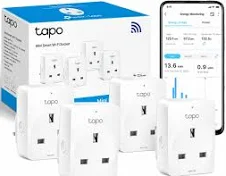
Smart plugs connect between a standard electrical socket and a compatible appliance.
They allow you to control the power supply remotely or through schedules.
For example, you might use one to control a compatible lamp.
Typical features include:
- Remote switching.
- Timers and schedules.
- Voice control.
- Energy monitoring on selected models.
- Smart home automation.
Advantages of smart plugs
- Very easy to install.
- No permanent wiring changes.
- Useful for existing lamps.
- Can be moved between suitable sockets.
- Often an affordable starting point.
Disadvantages of smart plugs
- They only control the power supply.
- They cannot independently adjust bulb brightness or colour.
- Not suitable for every electrical appliance.
- Maximum power ratings must be respected.
Never assume a smart plug is suitable for an appliance simply because the plug physically fits.
Check its rated current and power limits, and follow the manufacturer’s instructions. Avoid using smart plugs with high-power heating appliances unless the manufacturer explicitly confirms suitability.
4. Which option is easiest to install?
For most beginners, smart bulbs and smart plugs are the simplest options.
| Feature | Smart bulbs | Smart switches | Smart plugs |
|---|---|---|---|
| Installation | Replace bulb | Replace wall switch | Plug into socket |
| Electrical wiring changes | No | May be required | No |
| Dimming | Supported models | Compatible models | No |
| Colour control | Selected models | No, unless paired with smart bulbs | No |
| Physical wall control | Existing switch, with limitations | Yes | Existing lamp switch |
| Best use | Individual lights | Ceiling lighting circuits | Lamps |
The easiest option depends on your existing lighting and the features you want.
5. What about smart lighting compatibility?
Before purchasing smart lighting, check which smart home platforms it supports.
Popular ecosystems include:
- Amazon Alexa.
- Google Home.
- Apple Home.
- Matter-compatible platforms.
Also check whether the product requires a separate hub.
Some devices connect directly to Wi-Fi, while others use technologies such as Zigbee or Thread.
A product supporting Matter may offer more flexibility, but always check the exact platform and features supported by the manufacturer.
6. Can you combine smart bulbs, switches and plugs?
Yes. You don’t need to choose only one type of smart lighting.
For example, you could have:
- Smart bulbs in your living room.
- A smart switch controlling hallway ceiling lights.
- A smart plug connected to a bedroom lamp.
- Motion sensors controlling selected lights.
These devices can be combined in compatible smart home routines.
The important thing is to avoid creating conflicting controls.
For example, a smart bulb that loses power through a traditional wall switch cannot respond to an application while switched off at the wall.
Think about how everyone in your household will use the lighting before deciding on your setup.
7. Smart lighting automation ideas
Once your lighting is connected, you can create useful routines.
Evening lighting: Automatically switch selected lights on around sunset.
Bedtime routine: Turn off downstairs lights at a chosen time.
Motion-activated lighting: Switch hallway or landing lights on when movement is detected.
Holiday lighting: Use schedules to make selected lights operate while you’re away.
Wake-up lighting: Gradually increase brightness using compatible bulbs and supported automation features.
These small automations can make a noticeable difference to everyday convenience.
8. Which smart lighting option should you choose?
The best choice depends on your requirements.
Choose smart bulbs if:
- You want simple installation.
- You want colour or brightness control.
- You only need to automate individual lights.
- You don’t want to change electrical wiring.
Choose smart switches if:
- You want to control existing ceiling lights.
- You prefer physical wall controls.
- You want to control multiple ordinary bulbs together.
- Your wiring is compatible.
Choose smart plugs if:
- You want to automate existing lamps.
- You want a quick installation.
- You don’t need brightness or colour control.
- You want to start with a small smart home project.
Final thoughts
Smart bulbs, switches and plugs all have a place in a modern smart home.
Smart bulbs offer flexibility, smart switches provide convenient control over existing lighting circuits, and smart plugs make ordinary lamps easier to automate.
For most beginners, starting with a few smart bulbs or plugs is a straightforward way to explore smart lighting.
If you’re considering replacing wall switches, check the wiring requirements carefully and use a qualified electrician where necessary.
At SmartHomeNest UK, we believe the best smart home setup is one that makes everyday life easier without unnecessary complexity.